

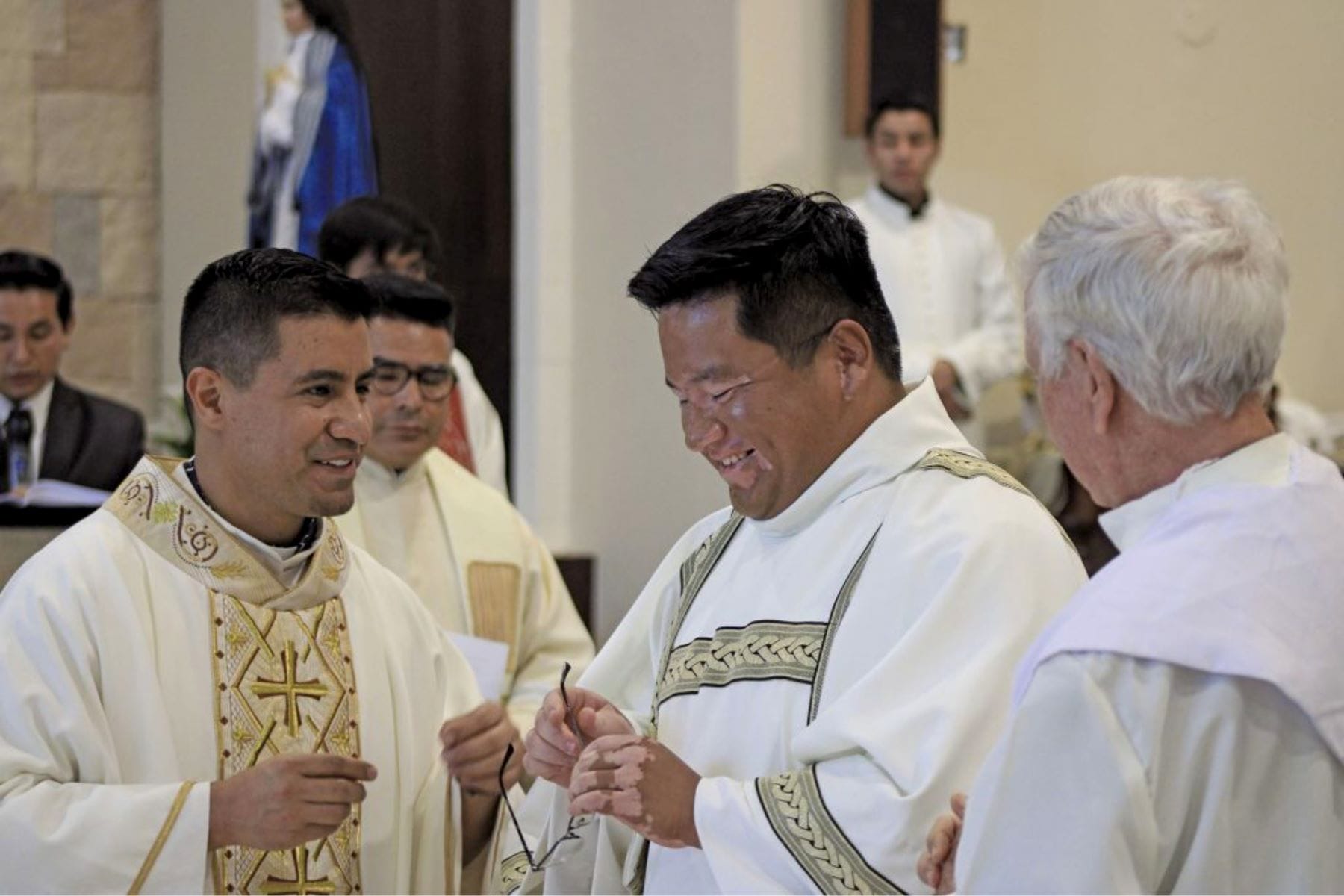
Diaconal Ordination in Mexico.

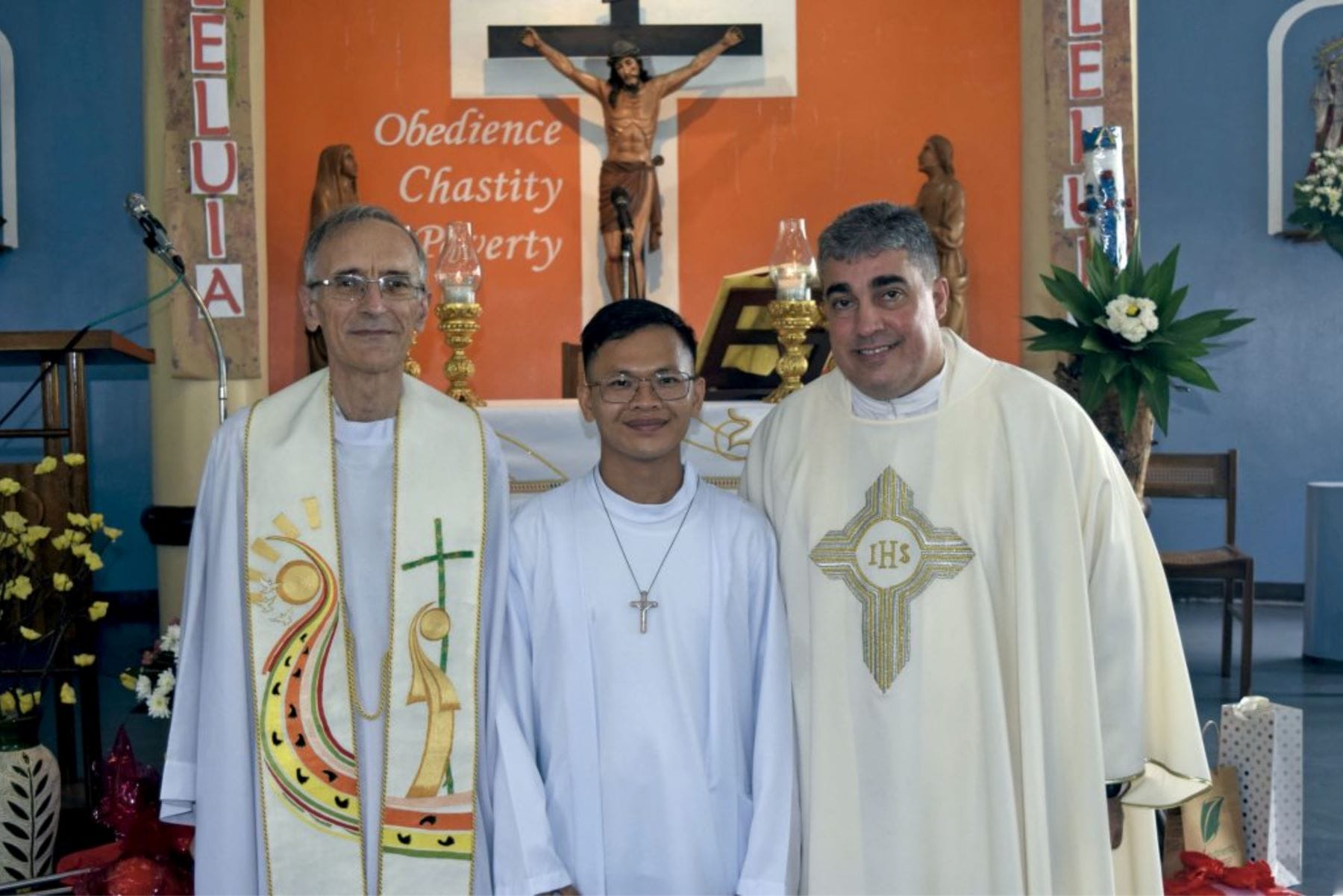
Vows in the Philipppines.

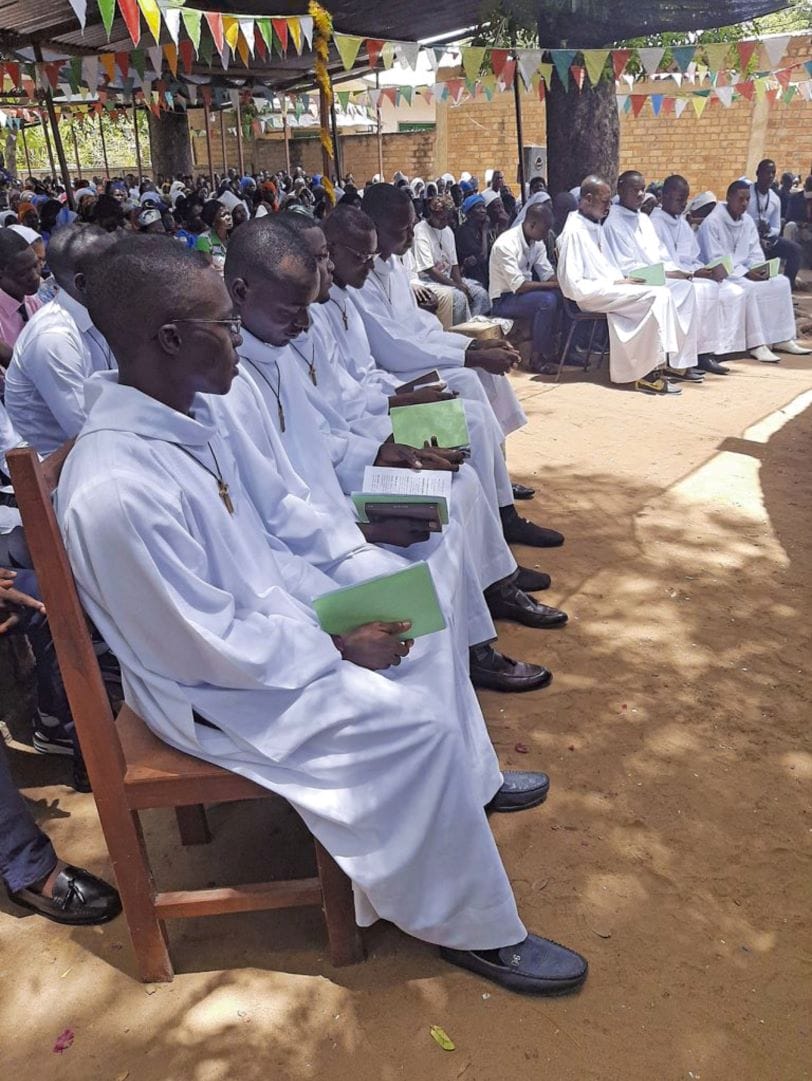
Comboni novices make their vows in Chad.


Preistly ordination in Chad.


Fr. José de Jesús Villaseñor Gálvez
Fr. José de Jesús Villaseñor Gálvez is a Comboni Missionary from Mexico. He is the Secretary General of Formation for the Comboni Missionaries Institute.
By: Fr. José de Jesús VILLASEÑOR, mccj
Father José de Jesús Villaseñor, a Mexican Comboni missionary, is currently the Secretary General for Formation of the Comboni Missionary Institute. From Rome he sends us this report on the situation and challenges of the formation of the new generations in our Institute, which is experiencing a boom in vocations, both in quantity and diversity.
Saint Daniel Comboni considered formation, that is, the (wise) choice and preparation of young people for the mission, to be “the first and most important mission of the institute,” and he wrote so in the Rules of 1871. For Comboni, the Rules must inspire a free and generous adherence, fostering the individual’s ability to “regulate” himself in a manner consistent with the principles, in the diversity of situations in which missionary activity is exercised.
The Church, with the teaching of Pope Francis through the publication of the new Ratio on formation, has specified the importance of formation being integral and missionary: This, “must be presented as unique, integral, communal and missionary.” Formation must be understood in an integral vision, which takes into account the four dimensions proposed by Pastores dabo vobis which, together, make up and structure the identity of the Comboni missionary and make him capable of that gift of himself to the Church.
We Comboni Missionaries consider the service in the field of initiation of our missionaries to be a priority. This requires a great commitment of personnel and financial resources. It also reveals the importance and consideration we have for formation, convinced that the qualified education of our members depends on the renewal of all of us who make up the Institute today. And for this reason, we are committed to ensuring a solid and effective instruction of the young people who want to be missionaries.
A few years ago, in order to maintain this unity, the Institute revised and updated the Ratio Studiorum, a document that presents the global formation project in its three stages: vocational promotion, basic initiation, and ongoing preparation.
The journey we have taken has allowed us to experience good fruits that we recognize with humility and gratitude to the Lord. These signs of life are an expression of the vitality of the charism and of the credible and silent witness of many of our brothers. Among these signs of life we can mention: the increase in vocations in Africa and Latin America, the adoption and implementation of the “Educational Model of Integration”, the care taken in the preparation of formators at all stages, the recognition and living of the richness of internationality and interculturality, the discreet, patient and generous commitment of many brothers in this service, the mission as the central point that guides the preparation of the young people we accompany, the appreciation of the meetings and assemblies of educators at the various levels, the availability of many brothers to carry out this delicate service for the good of the mission and the Church, the attention to having adequate formative structures and improving them in order to respond to the needs of young people and to the challenges that we face today.
Current Situation
In these times of change, by accompanying our young people with an attitude of active listening, without prefabricated recipes or giving ready-made answers, and freeing ourselves from rigid schemes, we discover the wonders of which today’s young people are capable. This leads us to ask ourselves: What are they like? In what sociocultural and theological context are they currently evolving?
A calm and attentive look at society allows us to understand and identify the real situation in which young people live. Only in this way will we be able to value and nourish the seeds of goodness sown in their hearts, considered “sacred ground,” bearers of the seed of divine life and before whom we must “take off our shoes” in order “to be able to approach and deepen the Mystery” (Christus vivit, 67).
From a demographic point of view, in some countries there are many young people. This fact explains the high number of vocations, while other nations with an ancient Christian tradition have a very low birth rate and few vocations. With this situation, the Institute is experiencing a new vocational geography. We are called to take this change seriously as an opportunity for growth and a true expression of the vitality of the Comboni charism.
On the other hand, we see that “many young people live in contexts of war and suffer violence in an innumerable variety of forms: kidnapping, extortion, organized crime, human trafficking, slavery and sexual exploitation, war rape, etc. Because of their faith, other young people find it difficult to find a place in their societies and are victims of persecution, and even death. Many young people, through constraint or lack of alternatives, live perpetrating crimes and violence: child soldiers, armed and criminal gangs, drug trafficking, terrorism, etc. This violence cuts short many young lives. Abuse and addiction, as well as violence and negative behavior are some of the reasons that lead them to prison, with a particular incidence in some ethnic and social groups” (Christus vivit, 72).
Many young people are ideologized, used as a force to destroy, intimidate, or ridicule others. And the worst thing is that many become individualistic subjects, enemies, and distrustful of everyone, and thus become easy prey for dehumanizing proposals and destructive plans drawn up by political groups or economic powers. Even more numerous are those who suffer from forms of marginalization and social exclusion, for religious, ethnic, or economic reasons. Let us recall the situation of pregnant teenagers and the “scourge of abortion”, as well as the spread of HIV/AIDS, and the various forms of addiction (drugs, gambling, pornography, alcoholism, etc.).
These situations hurt them and hinder their path of formation and conversion to the demands of missionary life, which consist in “going out of themselves to go with Christ towards the Father and towards others, embracing the religious, missionary or priestly call, committing themselves to collaborate with the Holy Spirit in the realization of interior synthesis, which consists in integrating, in a serene and creative way, personal qualities and defects, talents and limitations, weaknesses and strengths.”
Faced with this reality of fragility, the Institute believes that a journey of discernment is necessary. This means using prayer, personal and community reflection, and wisdom reading to assess, select, and verify what is truly important for missionary life. Today, life offers enormous possibilities for actions and distractions that the world presents to us as lights, and which lead us to worldliness, to resist the process of growth and conversion, to remain rigid, and to reject all change. Young people are exposed to a profound superficiality that manifests itself in constant zapping. True discernment must overcome the trends of the moment. Scrutiny is necessary when it comes to grasping the newness of God that appears in our lives or the falseness of the proposals of the spirit of the world (cf. Gaudete et Exultate, 166-168).
We are free, but this freedom in Christ calls us to examine what is within us: dreams, desires, anxieties, fears, aspirations… but also what happens around us in order to recognize the paths to full freedom: “test all things and hold on to what is good” (1 Thessalonians 5:21). The Comboni formation process is fulfilled when it touches the heart of the candidate to transform his thoughts and attitudes in such a way as to strengthen that parrhesia for evangelization (cf. Gaudete et Exsultate, 132-133).
Where Are We?
Looking at the reality of our Comboni formation today, we discover lights and significant aspects that give us hope for the future. Our preparation makes us experience the transition from being a purely European Institute to a more international and intercultural one. This dimension of internationality at the level of Comboni formation is manifested in the composition of the formation teams, in the international scholasticates. This catholicity and internationality are expressed in interculturality, assuming difference and living it not as an obstacle, but as a wealth and an additional challenge for the future. The formation process leads us to become community people, to build a community of encounter that brings out the beauty of unity in Christ Jesus, the Master who calls us, and also strengthens the charismatic identity of the Comboni missionary.
On the other hand, we are aware of the new geography of vocations, the fruit of the charismatic vitality and witness of so many brothers, and of the esteem of the local Church. Vocations are gifts from God for the Institute, entrusted to the responsibility of everyone. We feel the need to take care of formation, accompaniment, and discernment in order to offer authentic vocations to the mission. The vocational boom that we are experiencing today is a good opportunity to make a good selection of candidates capable of parrhesia for the mission of the Institute.
We are concerned that modern society is generating a “fragile generation of young people.” Some of them knock on our door and express their desire to be missionaries. The Institute accompanies them with their potential and weaknesses so that they can follow a path of growth, maturity, and inner freedom for the mission.
The Institute is made up of priests and brothers. While the formation of candidates for the priesthood is clear and is renewed from time to time by the Church, the preparation of Brothers needs to be reviewed, especially the study programs at the International Centers for Brothers. In addition to Social Transformation, it is necessary to diversify their studies in order to improve their professionalism and to equip them to give a quality service to the mission.
Many provinces have expressed the desire to have small formation structures with a view to an education more embedded in a significant pastoral reality. The considerable increase in the number of candidates, who are already on the path of Comboni preparation, requires a great investment in personnel and a significant financial cost. At present, many provinces have difficulty covering the costs of formation with their own resources.
On the other hand, ongoing formation is an important dimension that has to do with personal growth. In the communities and circumscriptions, personal prayer, retreats, community councils, spiritual accompaniment and annual spiritual exercises are means that have helped to grow in fidelity to the mission.
The synodal journey allows us to take better care of people, of our brothers, and of our communities in fidelity to the Comboni missionary vocation. This care implies that each person lives in a sincere availability of “docibilitas” to grow in his relationship with the Lord, with himself, with others, and with creation, and places the community as a permanent place of journey, fraternity, proclamation, and witness.
Specializations, on the other hand, are a qualified service for the mission of those who have the capacity, maturity, and adequate disposition, with a valid experience of mission. Some fields must be strengthened, such as: Justice, Peace, and Integrity of Creation; New Information and Communication Technologies; Care for the elderly, Economics and Administration, Islam, Canon Law and Civil Law.
Challenges
Spiritual life is what sustains our missionary vocation. We are convinced that without this experience of God who loves and transforms, there is no missionary religious life. The encounter with Jesus and the Comboni experience occur through community life in fraternity, internationality, interculturality, respect and openness to differences, the living of the evangelical counsels and the passion for the poorest: all this enriches spiritual life.
Another challenge is the requalification of vocational promotion, especially through the selection and formation of brothers called to carry out this important service for the future of the Institute.
The media is an important area in the lives of people, especially young people. We are called to reflect and find ways for these media to help us grow humanly and spiritually, to make our mission and activities known, and for these not to be merely a means of personal use that encloses us within ourselves.
Justice, peace, and care for creation are also challenges that must be present in the formative process, which goes beyond a proposed path of faith.
There are situations in which, due to the cultural and social context, the reality of young people presents important aspects that deserve special attention, such as those over 35 years of age who arrive with a profession and work experience, and wish to be missionaries.
Vocations are the wealth and future of the Institute and of the mission. We are now experiencing a new situation in which provinces with many vocations cannot bear the costs of formation. We feel the need to initiate a process of sustainability to ensure the preparation of their candidates.
Finally, it is necessary to prepare and accompany the animators of ongoing formation, so that they are prepared and carry out their service by offering the brothers and the communities a plan in harmony with what the Institute proposes, as well as promoting the “culture of care” suggested by the Pope, linking it also to the care of the elderly and sick brothers, as a qualified contribution that they make to the entire Institute.

