

Fr. Bienvenu Pika Wasato

Sister Teresa Romero


Fr. Benedicto Sánchez Peña
Fr Enrique Bayo
Fr. Enrique Bayo, mccj, is editor of Mundo Negro the Comboni missionaries magazine in Madrid
By: Fr. Enrique Bayo, mccj
Four Missionaries Share Their Experiences in Angola
They are four missionaries, one woman and three men, one Congolese, and three Spaniards. Each one lives the mission according to his or her charisma and life experience, but all are happily immersed in the realities of the people with whom they share their lives.
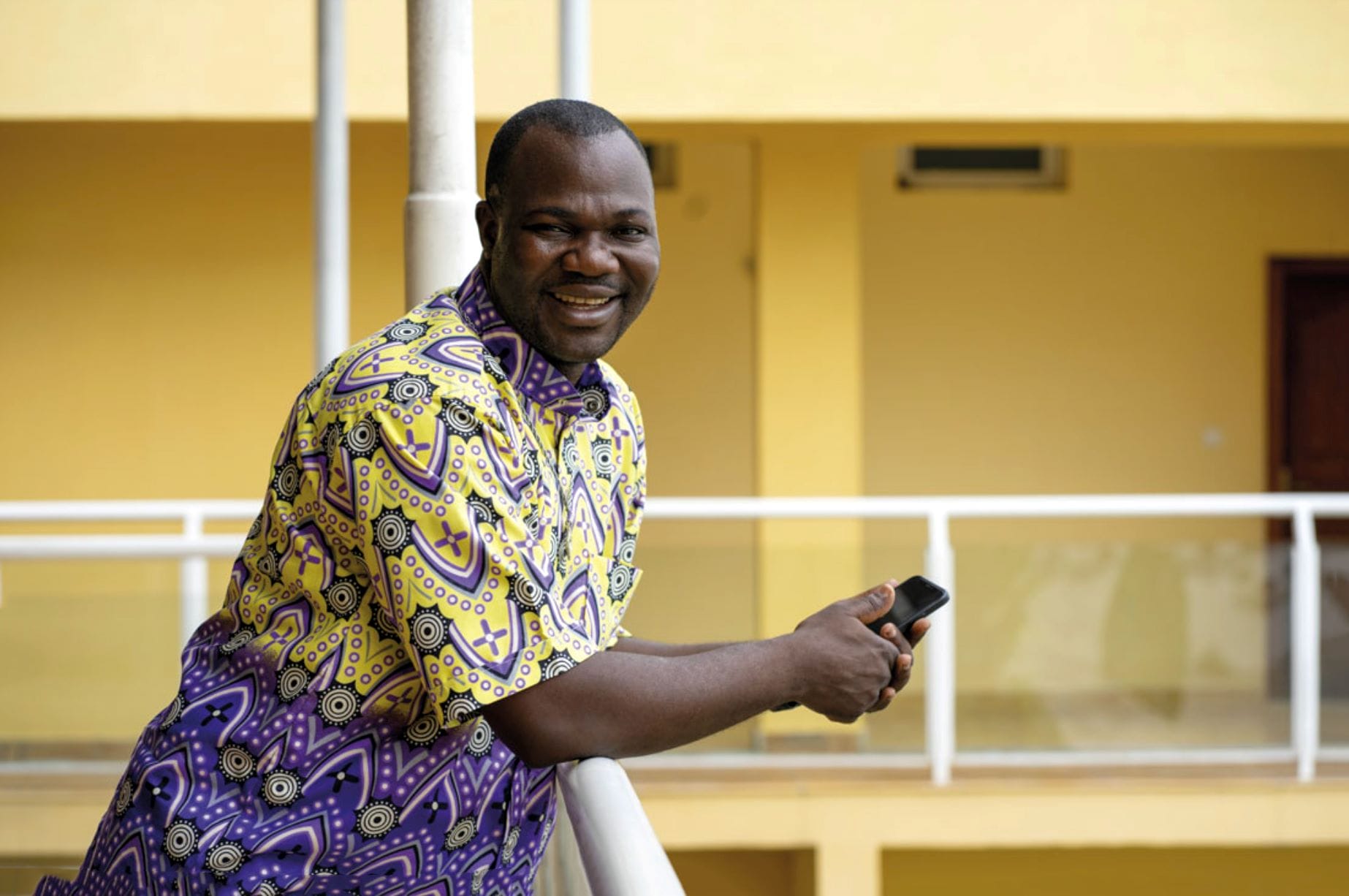
Fr. Bienvenu Pika Wasato: “Hope must not die”
Fr. Bienvenu Pika Wasato was born in Yamolia (DRC) in 1984 and is a member of the congregation of the Priests of the Sacred Heart of Jesus, better known as the Dehonians. They are not missionaries ad gentes and usually work in their countries of origin, but Fr. Bienvenu volunteered to leave his homeland. “I never thought of coming to Angola. I asked for a French-speaking country, but pastoral needs brought me here. I studied the language in Portugal and then spent two months in Mozambique for missionary preparation, psychological support and intercultural learning.”
In 2018, he arrived in Luanda, in the diocese of Viana, to serve in the parish of Our Lady of the Rosary and its three large pastoral centers, which serve tens of thousands of Catholics. Happy with his missionary experience, in March 2019, Fr. Pika asked the superior general to be permanently assigned to Angola. A few days after his request was accepted, he was elected provincial superior: “I don’t understand why they chose me. I didn’t want to accept but they insisted a lot and I couldn’t escape,” he says.
Today sixteen Dehonians are working in Angola, spread across three communities: Viana, Luena, and Luau, in the province of Moxico. In addition to pastoral activities and human promotion, the priority remains formation, even though, as Fr. Bienvenu laments, twenty years after the congregation arrived in Angola, the results are not as expected: “There are many young people who knock on our door, attracted by the spirituality of the Sacred Heart of Jesus, and every year we welcome groups of them, but there is a lack of perseverance and at the end of the three years of Philosophy, despite having been admitted to the novitiate, the majority do not continue. At the moment we only have two Angolan priests, a deacon, and two theology students.” The second priority of the Dehonians is fraternal life, something fundamental for Fr. Bienvenu because “the pastoral needs are immense, and since we are so few, it is important to build a good community life before thinking about the apostolate.”
The episcopal conference encourages “listening pastoral care” to guide Christians and non-Christians who ask for spiritual accompaniment. The religious loves this pastoral service and recognizes that “there are hundreds of requests. People suffer a lot and need a lot of spiritual support.”
Fr. Bienvenu wants to stay in Angola but is concerned about the challenge of vocations in his congregation: “Without indigenous members we will not be able to continue with the mission because we do not have missionaries from outside. I arrived here with an optimism that is cooling off, although I am aware that hope must not die. God will provide.”
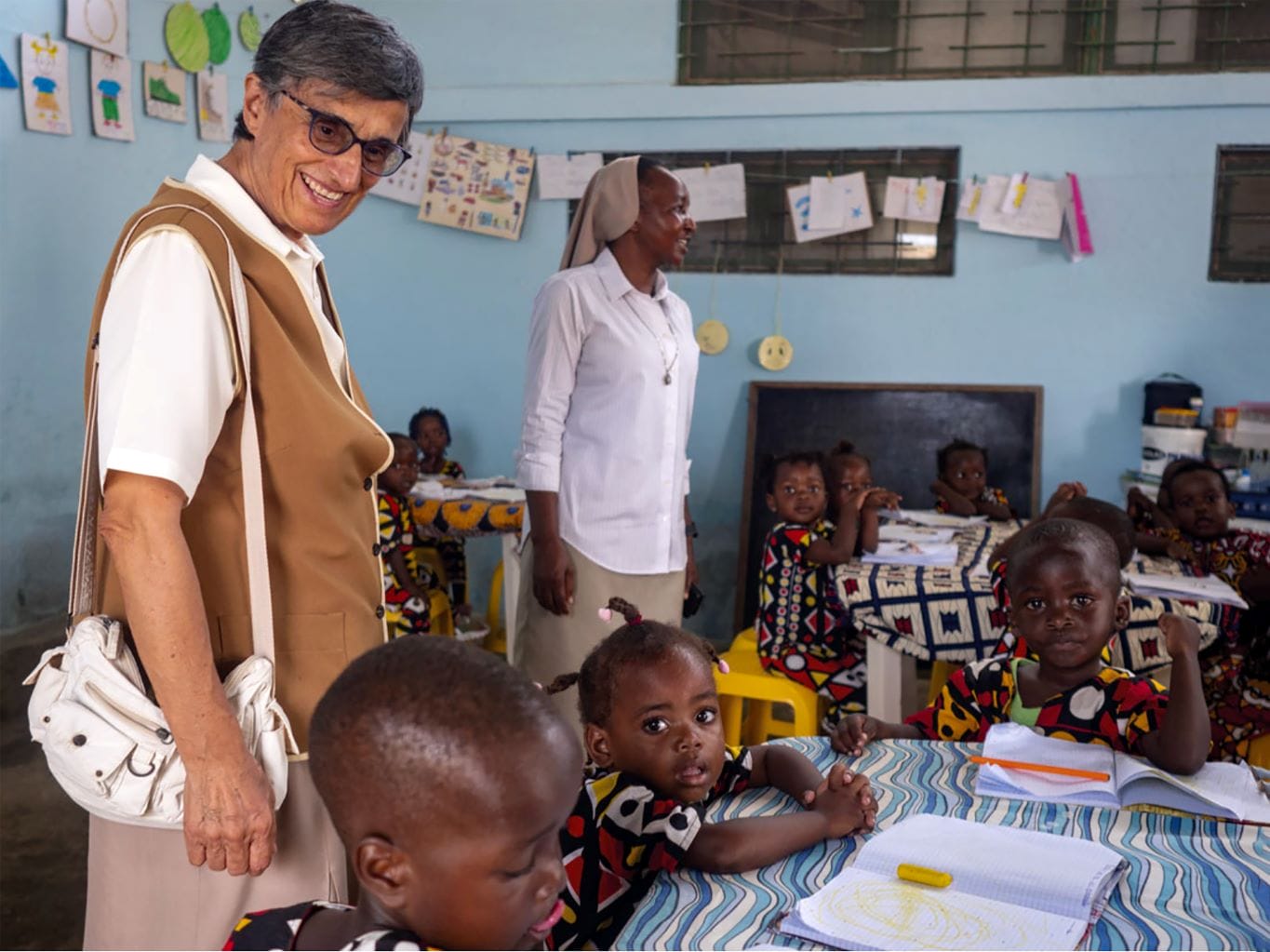
Sister Teresa Romero: “Mothers are saving families”
“I was fifty-five years old when I was offered the chance to come to Angola. I was hesitant, the mission seemed difficult to me, but during a spiritual retreat I found the strength to accept. I thought I could serve for five years, but I have been here for twenty-two years and I have no intention of leaving,” says Sister Teresa Romero, a member of the Daughters of Charity and a native of Noblejas (Toledo).
In Spain, Sr. Teresa worked as a teacher in different schools: Talavera, Lagartera, Madrid, and, finally, Vitigudino, the town in Salamanca where the famous bullfighter El Viti was born. Upon arriving in Angola, she continued to be involved in teaching, especially since she passed the competitive examinations in 2005 that accredited her as a teacher. At first, she worked in the school in the Prenda neighborhood, in Luanda, and later in the school in Balombo, in the coastal diocese of Benguela.
Of the nine years she spent in Balombo, Sr. Teresa fondly remembers the schools that opened in six rural villages. “One of us, Sr. Maria Jose, would visit the villages with the mobile clinic and saw that many children were not in school, so we started to create small schools. We chose teachers who lived in the village itself and every month they came to Balombo to receive training. We also gave them a small amount of money to encourage them to continue working. Later we left those centers in the hands of the Government, but for me it was a very great experience.”
Today, Sr. Teresa lives in Lobito. Her community is in the Compão district, but the sisters work in the neighboring Cassai district, where they run a school, a medical clinic, and a small residence for abandoned elderly people. Sr. Teresa, who is in charge of buying everything necessary for the mission, is afraid of the rise in prices due to the devaluation of the kuanza. “Everything is very expensive and there are people who are having a hard time. Every Saturday in the parish they organize what they call ‘solidarity soup,’ although they then give beans or rice, and lots of people come. I have a hard time finding the milk we give to the malnourished children in our clinic at a good price, as well as the medicines, which I buy in shops in the city because they are very expensive in pharmacies.”
When asked what she takes away from her missionary life in Angola, Sister Teresa does not hesitate: “The courage of the women. The mothers are saving their families with their efforts, because their husbands do not have work or have left and left them alone. I admire them.”
Brother Juan Andrés Martos: “The future of religious life is in Asia and Africa”
When Brother Juan Andrés Martos made his first vows at the age of seventeen in the congregation of the Brothers of the Holy Family, he asked to be sent as a missionary to America. They said no to him and he forgot about the mission ad gentes until 2021, when he was seventy-three years old, when he was asked to go to Angola, so he said, “At this stage of the game, it makes no difference to me whether I am in one place or another, and I signed up to come.”
Brother Juan was born in La Horra (Burgos), where the congregation opened its first community in Spain. He studied at their school from the age of six and at just fourteen he began training to become one of them. “I always admired them. When the first French brothers arrived in my town, they were asked to be educated and to fight against phylloxera in the vines. They began to work and made millions of nurseries of American vines which, grafted with Grenache and other varieties, allowed the entire banks of the Duero to be repopulated.”
Brother Juan’s consecrated life has been spent almost entirely in Spain. He has been a teacher and director of the schools of his congregation in Madrid, Burgos, Gavà, and Palma de Mallorca, as well as provincial superior in Spain and superior general, a period in which he moved to Rome and promoted the presence of his congregation in Colombia, India, and Indonesia. When in 2017 he wanted to found a place in Angola, “my General Council saw it as hasty and did not support me.” However, the General Chapter of 2019 approved this opening and all eyes were on Brother Martos, who arrived in the country in December 2021 with two Timorese brothers with temporary vows. They settled in Huambo and began to look for young people who wanted to be consecrated brothers like them. “Europe is finished, America is quite finished and the future of religious life is in Asia and Africa,” warns the religious.
Today the brothers are accompanying a young man with temporary vows, two novices, and five Angolan postulants, while others continue to knock on the door. “Certainly,” says Brother Juan, “we have not had any difficulty in finding candidates, although it is true that here the vocation of brother is not known and is a challenge for the Church itself, which I find very clerical. However, when our young people see that a brother is not a sacristan, but a religious with theological, university, and professional training, they begin to see the value of dedicating themselves to the mission as consecrated laymen.”
The charism of the Brothers of the Holy Family is education, and in Angola, many children are not in school. For this reason, one of the first things that Brother Juan did in Huambo was to buy a 16,000-square-meter plot of land to build a school. “We have fenced the land and we have the plans for the project. We have thought of a state-funded school so that the government can pay the teachers. It entails its risks, but here people do not have resources and a private school would have difficulty financing itself.” In April, work had already begun on the building.
Fr. Benedicto Sánchez Peña: “I want to share my experiences on reconciliation”
The superiors of the congregation of the Spiritan Missionaries accepted the request of Fr. Benedicto Sánchez Peña and immediately after being ordained a priest he was assigned to Angola. He arrived in 1974, when the country was experiencing the war of independence, which would later be prolonged by the civil conflict. His first mission was N’Dalantando, the same one where he lives today, fifty years later. The missionary remembers “the great suffering of those years” and how “insecurity and fighting limited our ability to move. It was then that we began to work with war orphans. The children arrived alone from the villages in the interior. With the help of catechists, the Legion of Mary and many people of good will, we began to welcome them. We lived together a lot; we sang with them and we helped them in everything we could with the support we received from abroad.”
Six years later, the missionary from Toledo, from Navalcán, returned to Spain and would not return to Angola until the year 2000. This time his destination was Malange. There he assisted in 2002 at the end of the civil war, which had left a devastated country. Fr. Benedict, almost without knowing how, began a work of reconciliation by visiting barracks and organizing meetings and talks with the military and police. “When they ask me where this initiative came from, I say that between the military and me, or the Church if you prefer, there was a wall that God broke down, we met and began to talk and walk together. True, where there is communism they always distrust each other, and when I gave a talk there was always someone listening to what I said to inform the Government, but little by little they understood the good will of this work, which was wonderful.”
Fr. Benedict addressed a wide range of topics at these meetings. At first, they were biblical catecheses on stories of reconciliation between the patriarchs or the relationship between dialogue and forgiveness, but the spectrum expanded to include talks on the family, the challenges of the nuclear age, or ecology. “Before Pope Francis wrote Laudato Si’, I had already given countless talks on this subject,” the missionary jokes.
In 2011, Fr. Benedict returned to Spain, and when he wanted to return to Angola for the third time in 2017, he encountered resistance from his superiors. “In the end they let me because I insisted too much. I wanted to return to share with this welcoming people my experiences of reconciliation, the strongest and most beautiful that missionary life has given me.” Another joy for Fr. Benedict on his return to N’Dalantando is meeting “former war orphans,” now in their fifties and sixties, who still remember the help and songs that the missionary gave them during their difficult childhood.

